Commercial Leases
Commercial Lease Reviewwith expert lawyers
Fixed-fee legal help from Australia's top-rated online law firm, with expert lawyers guiding you every step of the way.

100,000+ businesses helped


Get a free quote
We’ll get back to you within 1 business day.




What's included
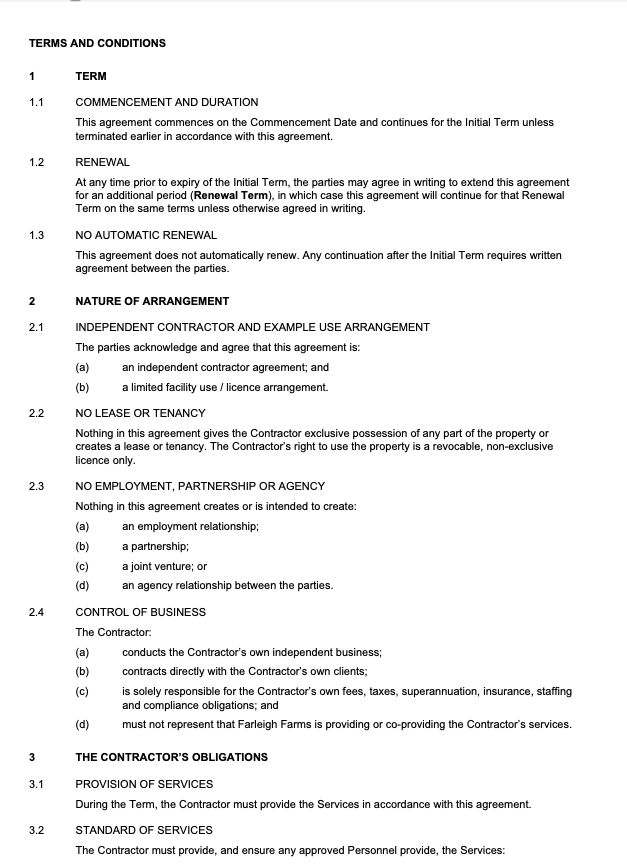
Review your commercial lease to identify and address key risks.
Our commercial lease review service helps you identify potential risks and negotiate better terms. Get peace of mind knowing your lease is in good hands.
- Detailed analysis of lease terms
- Identification of potential risks
- Recommendations for negotiations
- Expert legal advice tailored to your needs
- Clear and concise summary report
Project
Commercial Lease Review
Status
CompletePrepared by

Alex Solo
Senior Lawyer
FAQs
Frequently asked questions
Unsure about how we work? We have gathered the most common questions for your convenience.
A Commercial Lease Agreement is a legally binding contract between a landlord and a business tenant for the lease of commercial property. This can include office space, warehouses, retail shops or storage facilities, or other property used for business purposes rather than residential use.
The agreement sets out key terms such as rent, the lease term, permitted use of the property, maintenance responsibilities, and the obligations of both the landlord and tenant.
Because this contract affects how your business can operate from the premises, it’s important to negotiate terms that suit your needs. A well-drafted Commercial Lease Agreement can help reduce disputes and support your business objectives. Before signing, it’s a good idea to speak with a lawyer to make sure the terms are fair and in your best interests.
Commercial leases and residential leases differ in several important ways because of the type of property and how it is used:
- Purpose: A commercial lease applies to business premises such as offices, retail shops or warehouses, while a residential lease applies to property used for living purposes, such as houses or apartments.
- Legal protections: Residential leases typically provide tenants with more legal protections, such as limits on rent increases and stronger eviction protections. Commercial leases generally offer fewer protections because the parties are expected to have more equal bargaining power.
- Negotiability: Commercial leases are often more flexible and negotiable than residential leases, allowing the parties to tailor terms such as rent reviews, repairs and lease length to suit business needs.
- Lease term: Commercial leases often run for longer periods, commonly between three and ten years, while residential leases are generally shorter, often between six months and two years.
- Repairs and maintenance: In a commercial lease, tenants are often responsible for maintaining the premises, including repairs. In residential leases, landlords are typically responsible for maintaining the property.
- Outgoings: Commercial tenants are often required to pay additional expenses such as property taxes, utilities and maintenance costs, known as outgoings. In residential leases, these costs are often included in the rent or covered by the landlord.
Understanding these differences can help you negotiate terms that suit your needs, as commercial lease obligations are generally more complex than residential ones.
Before signing a Commercial Lease Agreement, it’s important to assess both the property and the lease terms to make sure they suit your business needs. Some key things to consider include:
- Visit the property: Inspect the premises in person to make sure they are suitable for your business, including the location, size and condition of the property.
- Research the market rent: Compare the rent with similar properties in the area to check whether the price is reasonable. Understanding market conditions can also help you negotiate better terms.
- Read the lease carefully: Review all lease terms, including rent increases, maintenance obligations and any restrictions on how the property can be used. A lawyer can help you understand the details and identify any clauses that may cause issues later.
- Long-term vs short-term lease: Consider whether a longer or shorter lease is better for your business. A longer lease may offer stability, while a shorter lease may give you more flexibility if your business is growing or may relocate.
Speaking with a lawyer can help make sure your lease suits your business needs and helps protect you from future issues. For more guidance, you can read further here.
When entering into a Commercial Lease Agreement, there are several key terms you can negotiate to make sure the lease works for your business:
- Rent: This includes the base rent amount and whether it is fixed or subject to review during the lease term. You may also be able to negotiate rent-free periods or other incentives from the landlord.
- Lease term: The length of the lease is important. You can negotiate for a longer or shorter term, as well as options to renew at the end of the lease.
- Rent review: Many leases allow the landlord to review and adjust the rent from time to time. You can negotiate how and when reviews happen, and whether increases are linked to market rates or inflation.
- Maintenance and repairs: It is important to clarify who is responsible for maintaining and repairing the premises. Tenants often try to limit responsibility for structural repairs, while landlords may expect tenants to handle day-to-day maintenance.
- Outgoings: These are additional costs, such as utilities or property taxes, that may be passed on to the tenant. You can negotiate which outgoings you are responsible for and whether they are capped or shared with the landlord.
- Break clauses: These clauses allow either party to end the lease early in certain circumstances. You may be able to negotiate a break clause to give your business more flexibility.
- Fit-out contributions: If the premises need significant changes to suit your business, you may be able to negotiate for the landlord to contribute to the fit-out costs.
Negotiating these terms can help make sure the lease is better aligned with your business needs and gives you the flexibility and protection you need during your tenancy.
Signing a Commercial Lease Agreement is a significant commitment, so it’s important to have the lease reviewed before moving into new premises. A legal expert can help you understand the terms of the lease and check whether it is favourable to your business.
Commercial leases create legally binding obligations between you and the landlord, often for several years. As the tenant, it’s important to know exactly what you’re agreeing to, especially when it comes to rent increases, maintenance responsibilities and any restrictions on how you can use the property.
Commercial lease agreements also usually set out the process for handling disputes between the tenant and landlord. Understanding this section is important in case issues arise later, such as disagreements about repairs or rent.
Having your lease reviewed by a lawyer can help you make sure the terms work in your favour, avoid hidden pitfalls and protect your business interests in the long run. Our experts at Sprintlaw are here to help with lease reviews.
Our Commercial Lease Review package starts at $500 + GST.
It includes an expert legal review of the commercial lease and Heads of Agreement from the landlord. You’ll also get phone consultations with a Sprintlaw lawyer, who will take your instructions and advise you on the legal issues you need to know.
Please note this does not include any suggestions for amending the document. If you’d like a list of key suggested amendments that you can request from the other side, please see our Lease Review (Amendment Advice) package.
From quote to delivery in three simple steps
Getting quality legal help for your business has never been easier or more affordable.
Get a free quote
Our legally trained consultants will prepare a fixed-fee quote for you.
Accept online
Accept your fixed-fee quote and e-sign our engagement letter.
Speak with a lawyer
Our expert lawyers will talk you through your project via phone, video call or whatever suits.
Get a free quote
Our legally trained consultants will prepare a fixed-fee quote for you.
Accept online
Accept your fixed-fee quote and e-sign our engagement letter.
Speak with a lawyer
Our expert lawyers will talk you through your project via phone, video call or whatever suits.



We've helped over 100,000 Australian businesses
From tech startups in Sydney to restaurants in Alice Springs, we consistently deliver a 5 star service.

“Can’t speak highly enough of my experience with Sprintlaw - quality advice, fast and efficient responsiveness and a professional product.”

Alex Wickert
MD, Adapt Leadership
“I’m so glad I used Sprintlaw - it was easy, affordable and their lawyers gave top quality advice. I could tell they really cared about my business.”

Emmy Samtani
Founder, Kiindred
“They’ve helped us tremendously and are seriously knowledgeable and honest. Couldn’t recommend the crew at Sprintlaw more!”

Amit Tewari
CEO, Soul Burger
Industry leaders


















Not sure where to start?
We can help.
Book a phone call with a legal consultant to get started.
Need help now?
1800 730 617