Contracts
Sub-Contractor Agreementwith expert lawyers
Fixed-fee legal help from Australia's top-rated online law firm, with expert lawyers guiding you every step of the way.

100,000+ businesses helped


Get a free quote
We’ll get back to you within 1 business day.




What's included
Define responsibilities and protect your interests with a sub-contractor agreement.
Our sub-contractor agreement service ensures your business relationships are clear and legally binding. Avoid disputes and safeguard your interests.
- Customised sub-contractor agreement
- Expert legal review and advice
- Clear terms and conditions
- Protection of your intellectual property
- Compliance with Australian laws
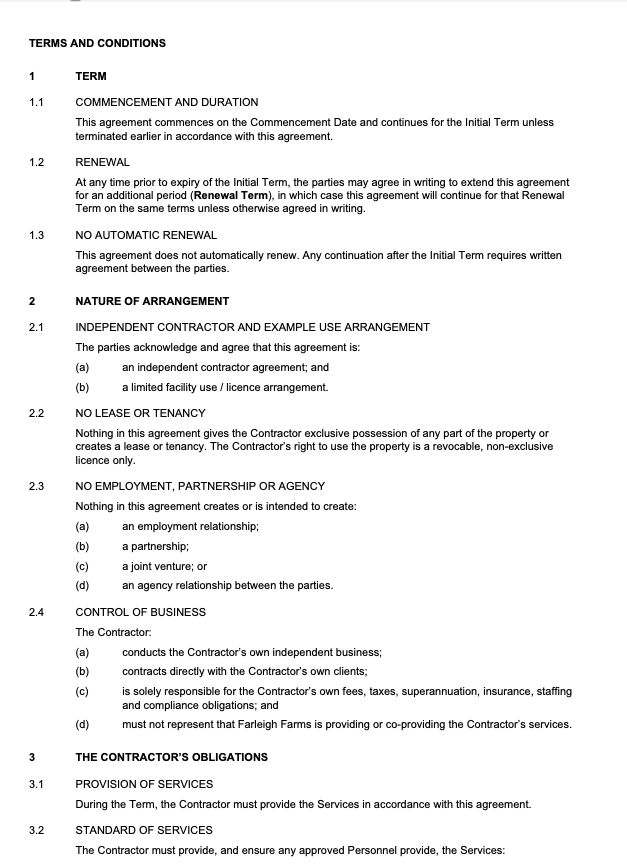
Project
Sub-Contractor Agreement
Status
CompletePrepared by

Alex Solo
Senior Lawyer
FAQs
Frequently asked questions
Unsure about how we work? We have gathered the most common questions for your convenience.
The main difference is who they work with and how they are engaged.
- Contractors:
- An independent contractor is an individual or company engaged directly by the client, also known as the principal, under a contract.
- They are responsible for delivering the goods or services set out in that contract.
- Contractors generally manage their own work processes, methods and schedule.
- They may engage sub-contractors to help meet their obligations, but they remain the main contact for the client and are responsible for delivering the project as agreed.
- Sub-contractors:
- A sub-contractor is engaged by the contractor, not directly by the client, to help complete part of the project.
- They are often brought in for specialised tasks within the broader scope of the contractor’s agreement with the client.
- For example, in a construction project, a contractor might engage a sub-contractor for specialised electrical or plumbing work.
- The contractor oversees the sub-contractor’s work and remains accountable to the client for the overall project.
In short, both contractors and sub-contractors provide services, but a contractor has a direct relationship with the client, while a sub-contractor works under the contractor. The contractor is responsible for the overall project, while the sub-contractor usually handles a specific part of the work. Read more here.
A Sub-Contractor Agreement is a legally binding document that sets out the terms and conditions between a contractor and a sub-contractor. When a contractor engages a sub-contractor to complete specific tasks or provide specialised services as part of a larger project, this agreement outlines the scope of work, responsibilities and expectations for both parties.
Having a Sub-Contractor Agreement is important because it:
- Defines roles and responsibilities:
- It sets out the specific tasks the sub-contractor will perform, helping both parties understand their roles and reducing the risk of misunderstandings.
- Establishes liability and standards:
- It clarifies who is liable for issues arising from the work performed, helps protect the contractor’s reputation and supports quality standards.
- Protects business interests:
- By formalising the relationship, it can help protect the contractor’s business interests, intellectual property and client relationships, especially where sensitive or proprietary information is involved.
- Sets payment terms and conditions:
- It explains how and when the sub-contractor will be paid, including any conditions or deadlines linked to project milestones or completion.
Overall, a Sub-Contractor Agreement is an important tool for supporting smooth collaboration, managing risk and providing legal protection if disputes or performance issues arise. It helps create a professional working relationship and supports the successful completion of the project. Read more here.
A Sub-Contractor Agreement should clearly set out the terms of the working relationship between the contractor and the sub-contractor. Key areas usually include:
- Scope of work and obligations:
- Clearly define the tasks and responsibilities of the sub-contractor, including the work to be completed, timelines and quality standards. This helps both parties understand the project requirements.
- Payment terms:
- Set out the payment structure, including rates, invoicing requirements and payment deadlines. It can also cover any conditions tied to payment, such as milestone completion or final approval from the contractor.
- Performance standards:
- Outline the expected level of performance and quality standards for the sub-contractor’s work. This can include specific benchmarks or deadlines.
- Confidentiality and non-disclosure:
- If the sub-contractor will have access to sensitive or proprietary information, the agreement should include a confidentiality clause to help protect the contractor’s business interests.
- Liability and indemnity:
- Clarify who is responsible for liabilities arising from the sub-contractor’s work, including any indemnity provisions if the sub-contractor’s actions lead to damage or legal issues.
- Termination:
- Set out when either party can end the agreement, including notice periods, reasons for termination and any financial implications of ending the arrangement early.
- Dispute resolution:
- Include a clause explaining how disputes will be handled, such as through negotiation, mediation or arbitration.
- Intellectual Property (IP) ownership:
- If the sub-contractor is creating intellectual property as part of the work, the agreement should clarify who owns the IP rights.
Because sub-contractor arrangements can be complex, it’s a good idea to have a lawyer draft or review your Sub-Contractor Agreement. A well-drafted agreement helps protect both parties’ interests and provides a clear framework for dealing with issues if they arise.
Our fixed-fee Sub-Contractor Agreement packages start at $500 + GST. This includes an agreement drafted for your specific needs, phone consultations with a Sprintlaw lawyer, and one complimentary amendment to the final draft we provide.
We handle everything by phone, email and video call, so you never need to visit an office. Once you request a quote, one of our legally trained consultants will get back to you within one business day with a fixed-fee proposal. If you accept, we will pair you with a specialist lawyer who will guide you through the process. All documents are delivered digitally, and you can communicate with your lawyer in the way that suits you best. It is the same quality legal advice you would get from a traditional firm, just without the commute, hourly billing surprises or the formality.
From quote to delivery in three simple steps
Getting quality legal help for your business has never been easier or more affordable.
Get a free quote
Our legally trained consultants will prepare a fixed-fee quote for you.
Accept online
Accept your fixed-fee quote and e-sign our engagement letter.
Speak with a lawyer
Our expert lawyers will talk you through your project via phone, video call or whatever suits.
Get a free quote
Our legally trained consultants will prepare a fixed-fee quote for you.
Accept online
Accept your fixed-fee quote and e-sign our engagement letter.
Speak with a lawyer
Our expert lawyers will talk you through your project via phone, video call or whatever suits.



We've helped over 100,000 Australian businesses
From tech startups in Sydney to restaurants in Alice Springs, we consistently deliver a 5 star service.

“Can’t speak highly enough of my experience with Sprintlaw - quality advice, fast and efficient responsiveness and a professional product.”

Alex Wickert
MD, Adapt Leadership
“I’m so glad I used Sprintlaw - it was easy, affordable and their lawyers gave top quality advice. I could tell they really cared about my business.”

Emmy Samtani
Founder, Kiindred
“They’ve helped us tremendously and are seriously knowledgeable and honest. Couldn’t recommend the crew at Sprintlaw more!”

Amit Tewari
CEO, Soul Burger
Industry leaders


















Not sure where to start?
We can help.
Book a phone call with a legal consultant to get started.
Need help now?
1800 730 617